
The Ingredient That Shows Up in Almost Every Bottle
Open any modern skincare product and there is a good chance niacinamide is on the list. Serums, moisturizers, cleansers, toners, even some sunscreens. Brands call it a multitasker, a barrier hero, an oil regulator, a brightening agent, a pore refiner. It has become the ingredient that supposedly does everything.
That is exactly why it also does nothing for a lot of people.
I have watched clients layer three different niacinamide products in one routine and wonder why their skin looks the same. I have also watched a simple 5% serum quietly improve texture and oil control over six weeks. The difference is almost never the brand. It is concentration, formula design, and whether the rest of the routine is fighting it.
Time for the plain-English version.
What Niacinamide Actually Is
Niacinamide is the active form of vitamin B3. It is water-soluble, stable, and generally well-tolerated. Once it is in the skin it supports several useful processes:
Helps strengthen the moisture barrier by supporting ceramide production
Can reduce excess sebum over time, which is why it shows up in oily-skin formulas
Fades the look of post-inflammatory marks and some uneven tone with consistent use
Plays nicely with most other ingredients, including retinoids and vitamin C derivatives
It is not a dramatic overnight transformer. It is a steady, supportive ingredient that works best when it is present at meaningful levels and not buried under twenty other things.
The Concentration Question No One Answers Clearly
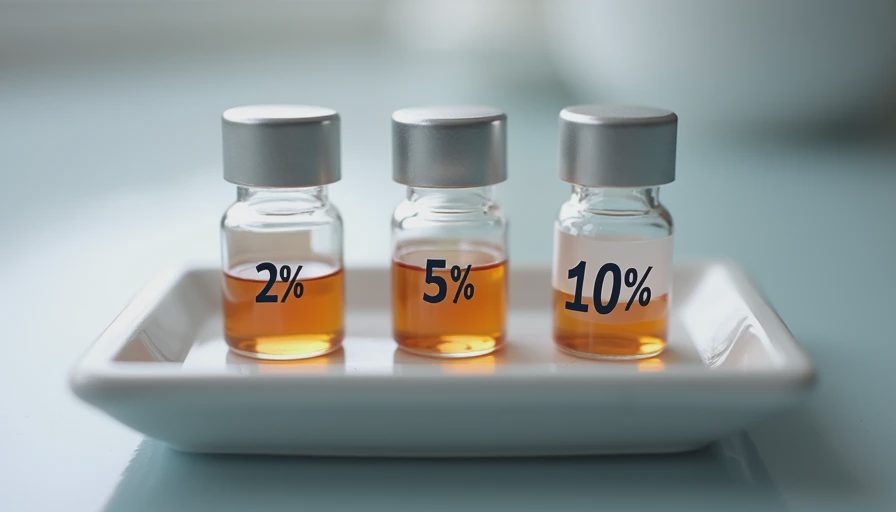
Most research that shows visible benefits uses niacinamide in the 2–5% range. Some studies go up to 10%. Below 2% you are often looking at a supporting role rather than a main actor. Above 10% some people get irritation and the extra percentage does not always deliver more results.
When a product lists niacinamide near the end of the ingredient list after water, glycerin, and a long string of conditioners, it is usually present at a low level. That does not make the product bad—it just means niacinamide is not the reason to buy it.
I look for formulas that either disclose the percentage or place niacinamide high enough on the list that it is doing real work. A transparent 5% or 10% serum is more useful to me than a moisturizer that mentions niacinamide in the marketing copy and hides it at the bottom of the label.
Why It Feels Like It Does Nothing
Three common reasons:
The percentage is too low to matter.
The rest of the routine is too aggressive—over-exfoliation or a damaged barrier will drown out gentle benefits.
Expectations are set for miracle-level change. Niacinamide is not retinol. It will not resurface your face in two weeks.
I ran a simple test on my own oily-combination skin years ago: one side a plain 10% niacinamide serum, the other side the same moisturizer with no extra niacinamide. After four weeks the treated side was calmer, slightly less shiny by afternoon, and the texture looked more even. Not dramatic. Just better. That is the realistic range for most people.
How to Use It Without Wasting Money
One well-formulated product at a solid percentage is enough. You do not need it in cleanser, toner, serum, and cream.
It plays well with almost everything, so you can keep it in both morning and night routines.
If you have very sensitive skin, start every other day. True irritation is uncommon but not impossible at higher percentages.
Give it at least four to six weeks before deciding it does nothing. Barrier and oil-regulation effects are not instant.
On the testing bench I still reach for a straightforward niacinamide serum when oil control and barrier support are the goal. I do not reach for the version that also contains twelve trendy extracts and costs three times as much unless the rest of the formula earns the price.
Cost-Per-Ounce Reality
Niacinamide itself is not an expensive raw material. A simple, stable 5–10% serum can be made and sold at a low price and still work. When the bottle costs $60 and the main active is niacinamide, you are mostly paying for packaging, brand, and the story that it “does everything.”
Sometimes the extra money buys better texture, better supporting ingredients, or more elegant packaging. Sometimes it buys very little. The label and the percentage (when disclosed) tell you more than the marketing claims.
The Bottom Line
Niacinamide is a solid, well-researched ingredient. It is not magic and it is not useless. It sits in the useful middle: helpful for barrier, oil, and tone when the concentration is meaningful and the routine is sensible.
Learn the label, then choose. Check where it sits on the ingredient list, whether the percentage is given, and whether the rest of the formula makes sense for your skin. One good product is worth more than three bottles that each contain a dusting of the same ingredient.
That approach has kept my own shelf quieter and my results more consistent. It works just as well when you are standing in the aisle wondering if the newest niacinamide serum is actually going to do anything.



No letters yet — be the first to write.