
The Ingredient That Sounds Like the Future
Peptides have become one of the most popular “anti-aging” claims on serums and creams. Brands describe them as messengers that tell your skin to make more collagen, tighten, firm, or repair. The bottles are rarely cheap. The ingredient lists can be long and scientific-looking. The marketing is confident.
I have tested a lot of peptide products over the years—on clients and on my own face. Some delivered a modest, useful improvement in firmness and texture. Others felt like expensive water with a fancy story. The difference almost always came down to the specific peptides used, their concentration (when disclosed), the overall formula, and realistic expectations.
Here is the no-hype version.
What Peptides Actually Are
Peptides are short chains of amino acids. In skin they can act as signaling molecules. Certain sequences are designed to mimic parts of collagen or other structural proteins and theoretically encourage the skin to behave as if it needs to produce more of those proteins.
Common categories you will see:
Signal peptides (often claimed to boost collagen)
Carrier peptides (help deliver trace minerals)
Neurotransmitter-inhibiting peptides (marketed for expression lines)
Enzyme-inhibitor peptides
The most studied and frequently used ones in cosmetics include things like Matrixyl (palmitoyl pentapeptide), copper peptides, and various “biomimetic” sequences. Some have lab and small clinical data behind them. Many others are newer and rely more on in-vitro results or brand storytelling.
The Label Reality Check
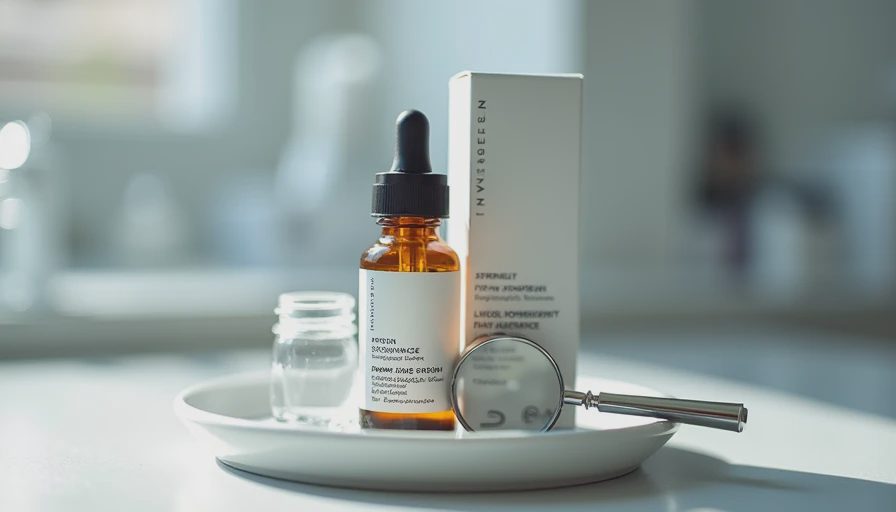
Most peptide products do not disclose the exact percentage. That makes evaluation harder. When a peptide appears near the end of a long ingredient list, the amount is usually low. “Peptide complex” on the front of the bottle does not tell you how much is actually in the formula.
Good signs:
Specific peptide names rather than vague “peptide blend”
Supporting ingredients that help the skin barrier and hydration
Stable packaging
Less useful signs:
Extremely long lists of trendy peptides at undisclosed levels
Very high price with no transparency
Claims that sound like prescription results
Peptides are not retinoids. They are generally gentler and slower. They will not deliver the same visible turnover or collagen stimulation that a well-tolerated retinol can. They can be a helpful supporting player, especially for people who cannot use stronger actives.
What I Have Seen in Real Use
On the testing bench and in the treatment room, consistent peptide use over eight to twelve weeks sometimes produced a mild improvement in firmness and the look of fine lines. The change was never dramatic. It was more “my skin looks a bit more resilient” than “I dropped five years.”
The better-performing formulas usually combined peptides with solid moisturizing and barrier ingredients. The pure “peptide serum” that felt watery and cost $120 rarely outperformed a simpler, well-formulated moisturizer that happened to include a couple of peptides.
I have also seen plenty of products where the peptide story was stronger than the results. In those cases the cost-per-ounce numbers looked especially painful.
How to Decide If a Peptide Product Earns Its Place
Ask four practical questions:
Are specific peptides named, or is it just “peptide complex”?
Where do they sit on the ingredient list?
Does the rest of the formula support the skin (humectants, lipids, soothing agents)?
After cost-per-ounce math, does the expected modest result still feel worth it?
If you already use a retinoid and a good moisturizer, a peptide product is optional. If you cannot tolerate retinoids and want a gentler long-game option, a transparent, well-formulated peptide serum can be reasonable—provided the price does not make the math ridiculous.
Cost-Per-Ounce Reality
Peptides themselves vary in cost, but many of the commonly used ones are not expensive enough at cosmetic percentages to justify triple-digit price tags on their own. When a 30 ml peptide serum costs $100+, a large portion of that money is going to packaging, brand positioning, and marketing rather than the peptides.
I keep one solid mid-range peptide product on my shelf for days when I want a gentle supportive serum. The ultra-expensive versions get tested, noted, and usually do not earn permanent residency.
Learn the label, then choose. Look for specific peptide names, realistic claims, and a formula that supports the skin rather than just listing impressive-sounding ingredients. Peptides can be useful. They are rarely miracle workers, and they are frequently over-priced relative to the visible difference most people will see.
That clear-eyed approach has kept both my routine and my recommendations more honest.


No letters yet — be the first to write.