The best skin care routine is not the one with twelve steps, a marble tray, and three products promising glass skin. It is the routine you can repeat, understand, and afford long enough to judge. After years reading ingredient labels in spas and dermatology clinics, I have found that a reliable routine usually needs only a gentle cleanser, a moisturizer, sunscreen, and one targeted product chosen for a specific goal.
Start with skin goals, not shopping categories
Before buying anything, describe what you want to change. “Better skin” is too vague to guide a purchase. Are you dealing with tightness after washing, occasional breakouts, uneven-looking tone, rough texture, or visible dryness around the nose? Each concern points toward a different ingredient and a different testing timeline.
For dryness, look for glycerin, hyaluronic acid, squalane, ceramides, and petrolatum. Glycerin pulls water toward the skin, while ceramides and petrolatum help reduce water loss. For clogged pores, salicylic acid can be useful because it is oil-soluble and works inside the pore. For the look of uneven tone or fine lines, vitamin C, niacinamide, or a retinoid may be considered, but adding all three at once makes it impossible to know what your skin is responding to.
Your cleanser does not need to tingle, foam dramatically, or leave your face feeling squeaky. That tight feeling is often a sign that the formula removed more than surface oil. CeraVe Hydrating Facial Cleanser, Vanicream Gentle Facial Cleanser, and La Roche-Posay Toleriane Hydrating Gentle Cleanser are examples of straightforward options. Compare the package size and price rather than assuming the most expensive bottle is more effective.

What the best skin care routine looks like in the morning
Morning care should protect and support your skin, not create a chemistry experiment. Start with a gentle cleanse if you wake up oily or used a substantial night product. If your skin feels comfortable, rinsing with lukewarm water can be enough. Follow with a lightweight moisturizer if needed, then broad-spectrum sunscreen rated SPF 30 or higher.
Sunscreen is the step most likely to protect the progress made by the rest of your routine. Use enough to cover the face, ears, and neck; many people use the two-finger method as a practical estimate for face and neck. Reapply during extended outdoor time, sweating, or swimming. A pleasant sunscreen that you will actually use can outperform a theoretically perfect formula left unopened in a drawer.
If you want an antioxidant serum, place it after cleansing and before moisturizer. A 10 to 15 percent vitamin C product is a reasonable starting point for many experienced users, while niacinamide formulas are often easier to tolerate. Do not buy a serum simply because the percentage is printed in oversized type. A well-formulated product at 5 percent can be more useful than a harsh formula at 15 percent.
Build a sensible evening routine
The evening is a good time for targeted ingredients because you are not layering sunscreen and makeup over them. Remove makeup and sunscreen thoroughly, cleanse without scrubbing, and apply your treatment to dry or slightly damp skin according to the product directions. Finish with moisturizer.
Someone new to retinoids should begin slowly, perhaps two nights per week, using a pea-sized amount for the entire face. Apply moisturizer before or after it if your skin is easily irritated. Retinoids can cause dryness and flaking, and they are not appropriate during pregnancy unless a qualified medical professional says otherwise. For persistent acne, painful lesions, sudden rashes, or changes that concern you, a dermatologist is the right next step rather than an increasingly complicated shelf.
Exfoliating acids need the same restraint. Lactic acid tends to be a gentler option for surface texture, while salicylic acid is often selected for oily or congested areas. Start one or two times weekly and avoid combining an exfoliating acid, retinoid, scrub, and strong active serum on the same night. The best skin care routine leaves your skin calm enough to continue, not red enough to photograph dramatically.
Test products like a small experiment
When I run a half-face comparison, I change one variable at a time. Use the existing routine on one side and the new product on the other, or introduce the product to the whole face while keeping every other step stable. Record the date, amount used, texture, scent, and any visible or sensory changes. A phone note is enough; you do not need a laboratory spreadsheet, although I admit I have one.
Give a basic moisturizer at least several days to assess comfort and dryness. A treatment product may require four to eight weeks before you can fairly judge its effect on texture or breakouts. Stop if you develop significant burning, swelling, hives, or persistent irritation. A patch test behind the ear or along the jaw can reduce surprises, but it cannot guarantee that a product will suit your entire face.
Cost-per-ounce math also belongs in the experiment. A $18 1.7-ounce moisturizer costs about $10.59 per ounce. A $48 1.7-ounce moisturizer costs about $28.24 per ounce. The second formula could still earn its price if it has an elegant texture, a useful airless package, or ingredients that make daily use easier. But if both leave your skin equally comfortable, the cheaper one is doing the more honest job for your budget.
Common routine mistakes that waste money
The first mistake is changing everything in one weekend. If irritation appears, you will not know whether the cleanser, serum, exfoliant, or sunscreen caused it. Add one product at a time and keep the rest boring for at least a week when possible.
The second mistake is judging a product by its packaging. A frosted jar and botanical scent can make a moisturizer feel luxurious, but neither tells you how well it supports the skin barrier. Read the ingredient list, then consider texture and consistency. If a product smells wonderful and you enjoy using it, that matters; enjoyment improves adherence. It simply should not be confused with proof of performance.
The third mistake is buying backups before finishing the first bottle. Preservatives, packaging, and storage all affect a product's usable life. Finish what you own, note whether you used it morning, night, or both, and calculate how many weeks the container lasted. That gives you a more useful comparison than a single first impression.
A routine that can survive real life
A practical version of the best skin care routine might look like this: gentle cleanser, moisturizer, and sunscreen in the morning; cleanser, one treatment, and moisturizer at night. On dry-weather days in Boulder, I might use a richer cream over a lighter lotion. After a trail run, I focus on rinsing sweat and reapplying sunscreen rather than adding another serum. Travel, stress, and changing seasons are reasons to simplify, not reasons to panic-buy.
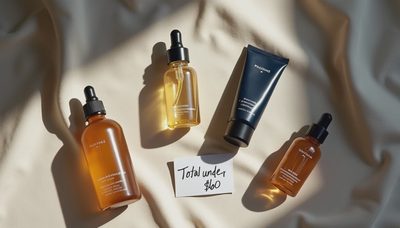
A starter budget can be surprisingly modest. A cleanser around $10 to $16, moisturizer around $12 to $25, and sunscreen around $12 to $22 can create a functional foundation. Add a targeted treatment only when you know which concern it addresses. Premium products can be worthwhile when their formula, packaging, or sensory experience solves a real problem, but price alone is not an ingredient.
The best skin care routine is the one that matches your skin, schedule, and spending limit. Learn the label, then choose. Give each change enough time to be judged, keep your morning protection consistent, and let a qualified clinician handle problems that fall outside cosmetic care. Your shelf does not need to look impressive. It needs to work.


No letters yet — be the first to write.