The best skin care routine steps are not the ones that fill an entire bathroom shelf. They are the steps you can repeat consistently, in an order that helps each product do its job. After years of reading ingredient lists and testing products side by side, I have found that a simple routine usually beats an expensive pile of half-used bottles. You need a cleanser, moisturizer, sunscreen, and perhaps one targeted treatment. Everything else earns its place by solving a specific problem.
The basic morning order
The most practical morning sequence is cleanse, treat, moisturize, and protect. Start with a gentle cleanser if you wake up oily or used a rich product overnight. If your skin feels comfortable and dry, rinsing with lukewarm water can be enough. Hot water and aggressive scrubbing are not signs that a cleanser is working; they often leave skin feeling tight because too much surface oil has been removed.
Next comes a treatment product, such as a vitamin C serum or a hydrating formula containing glycerin and hyaluronic acid. Glycerin is a humectant, meaning it helps attract water to the skin. It is not glamorous, but it is useful and appears in products costing $10 as often as products costing $80. Apply a moisturizer after your serum, then finish with broad-spectrum sunscreen rated SPF 30 or higher. Use roughly two finger lengths for the face and neck, adjusting for your product's texture.
The morning routine should take about three minutes. If it requires ten steps, you are less likely to use it before a busy commute, school drop-off, or early workout.
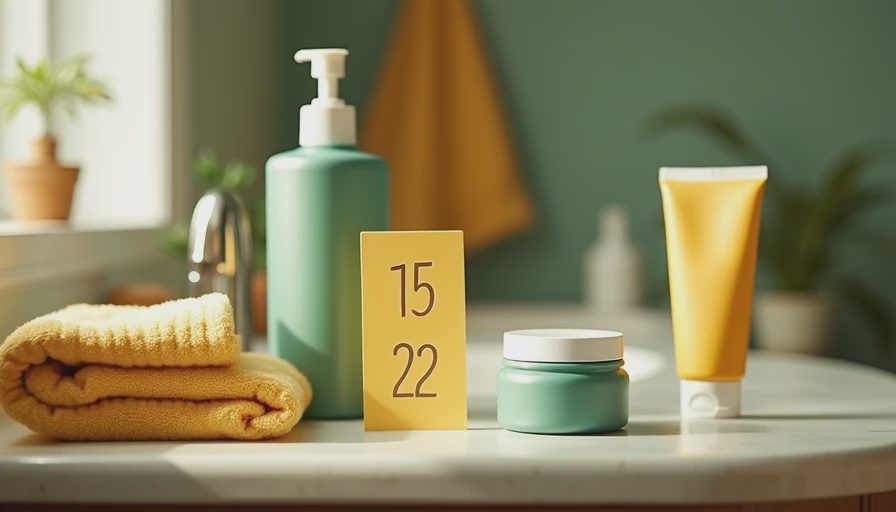
Skin care routine steps for a simple evening reset
Nighttime is when you remove sunscreen, makeup, sweat, and the day's accumulated grime. If you wear long-wear makeup or water-resistant sunscreen, begin with a cleansing balm or micellar water, then follow with a gentle water-based cleanser. This two-step method is useful, but it is not mandatory every night. A single cleanser that removes your products without leaving residue is perfectly reasonable.
After cleansing, apply one treatment rather than layering every active ingredient in your cabinet. Retinol is commonly chosen for the look of uneven texture and fine lines, while salicylic acid is often used by people dealing with visible congestion. These ingredients can be irritating when introduced too quickly. Start two nights per week, use a pea-sized amount for the entire face, and apply moisturizer afterward. Keep acids and retinoids on separate nights until you know how your skin responds.
A basic evening routine can cost less than $35 if you choose a drugstore cleanser, moisturizer, and treatment. Spending $150 on a serum does not automatically improve the result. I compare the ingredient list, amount in the bottle, and usage instructions before deciding whether a premium formula earns its price.
Choosing products by skin concern
The next of the skin care routine steps is matching the formula to your actual concern. For dryness, look for ceramides, squalane, petrolatum, and glycerin. Ceramides support the skin's moisture barrier, while petrolatum forms a protective layer that reduces water loss. A fragrance-free cream may be more useful than a beautifully scented gel if your cheeks feel rough by afternoon.
For oiliness, avoid the assumption that every rich moisturizer is wrong. Dehydrated skin can feel oily and tight at the same time. Choose a lightweight lotion, then evaluate it after two weeks rather than after one application. For dull-looking skin, sunscreen is the foundation. Without daily UV protection, brightening products have a harder job and your results are harder to maintain.
If breakouts, persistent redness, or painful irritation are your main concern, an esthetician can help with product selection, but a dermatologist is the right professional for diagnosis and medical treatment. Skincare can support comfort and appearance; it cannot replace medical care.
How to add active ingredients without wasting money
One of the most important skin care routine steps is adding only one new active at a time. If you introduce a retinol, exfoliating toner, peptide serum, and new cleanser during the same week, you will not know which product helped or caused irritation. Keep the rest of your routine stable for at least two weeks when possible.
Patch testing is sensible. Apply a small amount of the new product to an area near the jaw or behind the ear, then observe the area over a day or two. This does not guarantee that your whole face will react identically, but it gives you useful information. With leave-on treatments, less is usually enough. A $24 bottle that lasts four months costs about $6 per month; using twice as much does not make it twice as effective.
Avoid combining several strong exfoliants simply because the labels promise smoother, brighter skin. A cleanser with a mild acid, a leave-on exfoliant, and a retinoid may be too much for one routine. Alternate them, or choose the product that best fits your main goal.

Where cost per ounce matters
Price is easiest to judge when you calculate it. A 1-ounce serum priced at $36 costs $36 per ounce. A 1.7-ounce serum priced at $48 costs about $28 per ounce, even though the checkout price is higher. That does not prove the second formula is better, but it changes the comparison.
Packaging can also distort value. Pumps, droppers, and airless containers can make a product easier to use, while a wide jar may expose some formulas to repeated air and fingers. Still, attractive packaging should not distract you from the formula. Look near the beginning of the ingredient list for the ingredients the brand highlights, and remember that ingredients are generally listed in descending order by amount until the smaller concentration range.
Brands such as CeraVe, Vanicream, La Roche-Posay, Paula's Choice, and The Ordinary occupy different price ranges and specialize in different kinds of formulas. I would not choose one automatically. Compare the product's size, active ingredients, texture, and how often you will realistically use it.
A routine you can maintain
The final of the skin care routine steps is reviewing what you actually use. In the morning, that may be cleanser or water, moisturizer, and sunscreen. At night, it may be cleanser, one treatment on selected nights, and moisturizer. Give the routine eight to twelve weeks before judging a gradual change, while stopping a product that causes persistent burning, swelling, or a worsening reaction.
Store products according to their labels, close caps tightly, and write the opening date on unfamiliar bottles. If a product changes smell, color, or texture, it is not worth forcing yourself to finish it. You can also place a small basket near the sink so the products you use daily stay visible and the experimental purchases do not take over.
The smartest skin care routine steps are repeatable, affordable, and connected to a clear purpose. Start with the essentials, add one targeted product, and track what changes. Learn the label, then choose.



No letters yet — be the first to write.