Drugstore vs luxury skincare is not really a contest between cheap and expensive. It is a question of formulation, packaging, texture, and whether the product delivers something you can observe after consistent use. I have spent years reading ingredient labels in spa treatment rooms and testing products on half-faces at home. My conclusion is less dramatic than most beauty marketing: some prestige formulas justify their price, while many affordable products perform just as well.
The useful comparison starts when you ignore the gold cap and look at the first five to ten ingredients. Learn the label, then choose.
Drugstore vs luxury skincare: what are you paying for?
A higher price can reflect meaningful differences, but it can also reflect the shopping experience. Luxury products often spend more on elegant jars, airless pumps, fragrance development, clinical testing, packaging design, and retail presentation. Those details are not automatically useless. A pump that limits air exposure can protect a delicate formula, and a satisfying texture can make you apply moisturizer every night instead of abandoning it in a drawer.
Still, a $90 cream does not automatically contain better moisturizing ingredients than a $15 cream. Glycerin, petrolatum, dimethicone, squalane, ceramides, and fatty alcohols appear across price categories. Glycerin pulls water toward the outer layer of skin, while occlusive ingredients help slow water loss. Your skin recognizes the formula, not the department store location.
In my own drugstore vs luxury skincare comparisons, the expensive product most often wins on sensory details: quicker absorption, a more refined finish, lower tackiness, or a fragrance that feels like part of a spa appointment. Those qualities can be worth paying for, but they should be named honestly rather than disguised as guaranteed skin transformation.
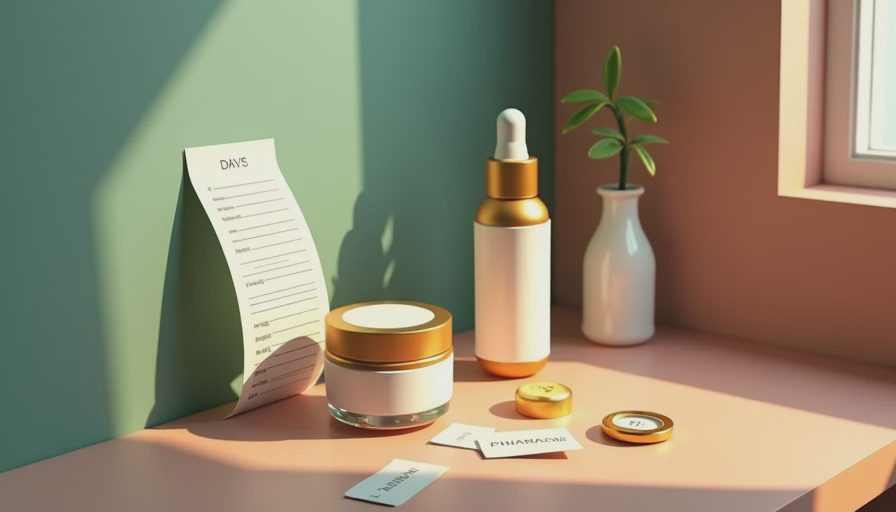
How I test drugstore vs luxury skincare
A fair comparison needs more structure than trying one cream on Monday and another cream three months later. I apply one product to the left side of the face and the other to the right, using similar amounts and the same cleanser and sunscreen on both sides. I photograph the skin under the same bathroom light, then note tightness, shine, pilling, comfort, and visible flaking.
For moisturizers, I usually allow at least two weeks of regular use. A single application can tell me whether a formula feels greasy or pills under makeup, but it cannot tell me much about longer-term comfort. For a cleanser, a week may reveal whether it leaves the face tight or comfortable. For an exfoliating product, I use a slower schedule because more frequent application can muddy the comparison and irritate the skin.
The most important control is the rest of the routine. If I test a new serum while also changing my sunscreen, cleanser, and foundation, I have created a beauty mystery, not useful evidence. In drugstore vs luxury skincare testing, boring consistency gives the clearest answer.
Read the ingredient list before the price tag
The first question is what job the product is supposed to do. A cleanser rinses away. A moisturizer supports comfort and reduces water loss. A serum may deliver humectants, antioxidants, or a more targeted active ingredient. A sunscreen must provide labeled broad-spectrum protection and be used as directed. Comparing a $12 cleanser with a $110 treatment cream is not a meaningful value test because they do different work.
Next, look for familiar functional groups. Humectants include glycerin, propanediol, and hyaluronic acid. Emollients soften the feel of the skin, while occlusives such as petrolatum can provide a stronger barrier-supporting effect. Ceramides can be useful in a moisturizer, but their presence alone does not prove that the entire formula is superior. The concentration, delivery system, supporting ingredients, and your tolerance all matter.
Fragrance deserves a practical, not fearful, discussion. A scented cream is not automatically a bad product. If your skin becomes itchy, flushed, or uncomfortable after using it, the pleasant scent is not worth forcing. If your skin tolerates fragrance and you enjoy the experience, that preference has legitimate value. The drugstore vs luxury skincare decision should leave room for both performance and pleasure.
Cost per ounce changes the conversation
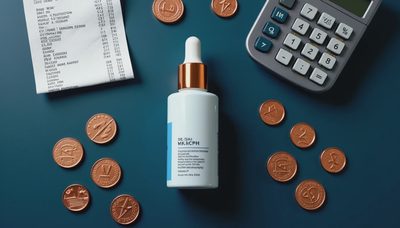
Sticker price can be misleading because package sizes differ. Imagine a $24 moisturizer containing 1.7 ounces and a $78 moisturizer containing 1.7 ounces. The first costs about $14.12 per ounce, while the second costs about $45.88 per ounce. If the luxury jar lasts twice as long because you need less product, the gap narrows, but it does not disappear. Measure usage for a week instead of relying on the size of the jar in your hand.
You can also calculate cost per day. A $30 product used for three months costs roughly 33 cents per day. A $95 product used for six months costs about 53 cents per day. That second product might still be reasonable if it replaces two separate products or makes you more consistent, but the math makes the tradeoff visible.
For drugstore vs luxury skincare, I record the product price, ounces, amount used per application, and estimated days of use. A $16 serum that requires a full dropper every morning may not be a better value than a $42 serum requiring three drops. Neither is automatically the winner; the spreadsheet simply removes some of the packaging drama.
Where affordable products often win
Affordable cleansers and basic moisturizers frequently offer the strongest value because their jobs are straightforward. CeraVe, Vanicream, La Roche-Posay, and Neutrogena each have products that focus on familiar categories such as gentle cleansing, barrier comfort, or daily sun protection. The right choice depends on the individual formula and how your skin responds, not just the logo.
Drugstore sunscreen can also be a smart place to save, especially when you need enough product for your face, neck, ears, and exposed chest. The best sunscreen is one you will apply generously and reapply when needed. A luxury tube that feels beautiful but gets rationed because it costs $70 is not necessarily serving you better than a comfortable $18 option.
That does not mean every low-cost product is a bargain. Very small packages, heavy fragrance, awkward dispensing, or formulas that make makeup separate can erase the initial savings. Value includes the cost of failed experiments, so sample sizes and return policies matter.
When luxury can earn its price
Luxury skincare can be worth considering when the formula solves a specific experience problem. You might prefer an emulsion that layers cleanly under makeup, a rich balm for dry winter evenings, or an airless package that makes a delicate product easier to use. Some prestige brands also invest in elegant textures and well-designed combinations of ingredients that feel noticeably more polished.
My standard is simple: can I name the benefit without using vague words such as radiant, elevated, or transformative? If the answer is “it spreads beautifully, does not pill, and makes me use moisturizer nightly,” that is a real benefit. It is not the same as claiming the product will erase lines or cure a skin condition.
In a drugstore vs luxury skincare decision, luxury earns consideration when the improvement is repeatable, useful, and visible enough to you to justify the extra dollars. A beautiful texture is allowed to matter. It just should not be confused with proof of superior results.
Build a routine without overspending
Start with a gentle cleanser if you need one, a moisturizer that leaves your skin comfortable, and broad-spectrum sunscreen during the day. Add a treatment only after the basic routine feels stable. This approach prevents the common mistake of buying four expensive products and having no idea which one caused dryness or which one helped.
Try a half-face comparison when practical. Use the same amount on each side, take notes twice a week, and give the product enough time to show a pattern. Track immediate feel separately from longer-term observations. “Less tight after cleansing” is useful data. “Looks expensive” is not.
My final take on drugstore vs luxury skincare is that price should be the last piece of evidence, not the first. Read the label, calculate the cost per ounce, test consistently, and keep the sensory details in their proper place. If a $14 moisturizer works beautifully, enjoy the savings. If a $90 formula makes your routine reliable and comfortable, it can earn its shelf space. Learn the label, then choose.

No letters yet — be the first to write.