The Shelf That Got Too Crowded
I used to leave the spa with clients carrying bags of products they did not need. Toner, essence, ampule, eye cream, neck cream, sleeping mask, oil, mist. By the time they got home the bathroom counter looked like a department-store display and their routine took twenty minutes. Most of them were still dealing with the same skin concerns three months later.
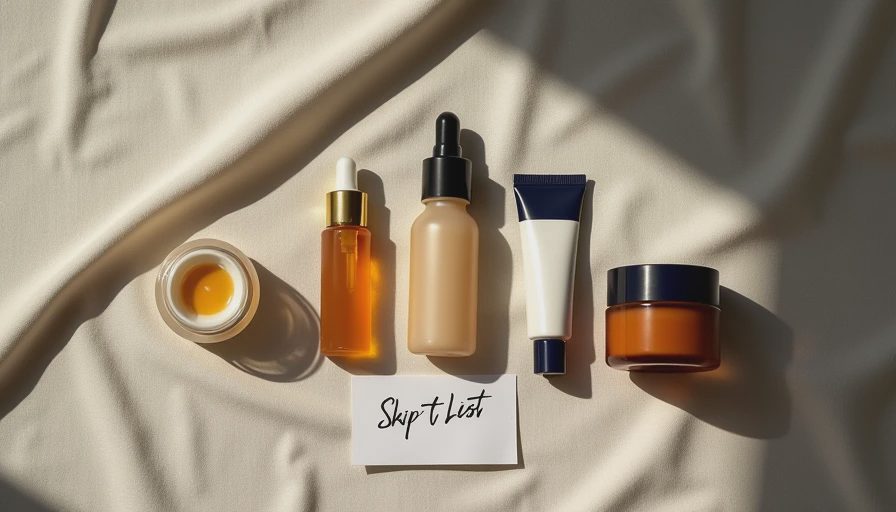
After years of watching this pattern and then testing simpler routines on my own face, I built a mental skip-it list. These are the categories that sound important in marketing but rarely deliver enough extra benefit to justify the cost, the time, or the risk of irritation for most people.
This is not a moral judgment. If you love a product and it makes you happy, keep it. This is simply the list I use when someone asks what they can drop without losing results.
1. Separate Eye Cream (for Most People)
The skin around the eyes is thinner, but it is still skin. A good moisturizer already contains the humectants and barrier ingredients that area needs. Dedicated eye creams are often just lighter moisturizers in smaller, more expensive packaging.
I have run informal comparisons for years. When the regular moisturizer is non-irritating and fragrance-free, most people see no meaningful difference from adding a separate eye cream. The exception is when someone needs a very specific active (like a low-strength retinol) only around the eyes and cannot tolerate it on the rest of the face. That is a targeted situation, not the default.
Skip it unless you have a clear, specific reason.
2. Toner (the Classic Kind)
Most traditional toners are either watered-down actives or alcohol-heavy formulas that feel refreshing for thirty seconds and then do little. The original purpose—restoring pH after harsh soap cleansing—is largely outdated now that most cleansers are properly formulated.
If a “toner” is actually a hydrating mist with glycerin or a leave-on exfoliant with clear percentages, it may earn a place. The average bottle labeled “toner” does not. I stopped recommending them as a standard step years ago and never saw results decline.
3. Face Oil on Oily or Combination Skin
Oils can be lovely for very dry skin or as a final seal in winter. On oily or combination skin they often just sit on top, make sunscreen and makeup harder to apply, and contribute to clogged pores for some people.
I have watched clients add a trendy face oil because an influencer said it would “balance” their oil production. In reality it usually increased the shine and the breakouts. If your skin is already producing enough oil, you do not need to add more.
4. Neck Cream
The neck is not a different organ. It is skin. The same moisturizer you use on your face works on your neck. The idea that the neck requires its own specially designed (and more expensive) cream is mostly marketing.
I tell clients to bring the face moisturizer down onto the neck and chest. It takes zero extra products and works. Dedicated neck creams rarely outperform this simple habit.
5. Overnight Masks Used Every Night
Occasional richer masks can feel nice. Using a thick sleeping mask every single night often means you are layering more product than the skin can comfortably handle, especially if you already use a moisturizer. For many people it leads to congestion or just wasted product.
A good moisturizer already provides overnight support. Save the heavy mask for once or twice a week if you enjoy the ritual.
What Actually Earns a Permanent Spot
After cutting the extras, most people do well with:
A gentle cleanser
One solid treatment (retinoid or niacinamide or vitamin C, depending on goals)
A moisturizer that matches their skin type
Sunscreen every morning
That is the core. Everything else has to prove it adds enough benefit to justify the money and the time.
I ran my own routine down to these basics after leaving the spa and kept detailed notes. My skin did not fall apart. It got calmer. The cost-per-ounce numbers improved dramatically. The morning and evening routine dropped to under three minutes.
How to Edit Your Own Shelf
Look at every bottle and ask:
Does this do a job that nothing else in my routine already covers?
Have I seen a clear difference since I started using it?
Is the cost-per-ounce still reasonable for the result I get?
If the answer is no to most of those, it can go. You can always reintroduce something later if you miss it.
Simplifying is not about deprivation. It is about removing the noise so the products that actually work can do their job. Most people need less than they have been told.
Learn the label, then choose. And when the label belongs to a product that sits in the skip-it category for your skin type, give yourself permission to leave it on the shelf.



No letters yet — be the first to write.