When someone asks me about serum value for money, they usually do not want the cheapest bottle on the shelf. They want to know whether a $72 formula is genuinely better than a $19 one, whether the bottle will last long enough to justify its price, and whether the ingredient list supports the marketing. After twelve years working with skincare products in spas and dermatology clinics, I have learned that price alone tells you very little. The useful answer is in the formula, the amount, and your actual routine.
Start with cost per ounce
The first calculation is simple: divide the product price by the number of ounces in the bottle. A $24 serum containing 1 ounce costs $24 per ounce. A $48 serum in a 0.5-ounce bottle costs $96 per ounce, even though the sticker price looks less dramatic than a luxury product.
This is why I always check the net weight or volume before comparing brands. Dropper bottles often contain 0.5 or 1 ounce, while some pump serums offer 1.7 ounces. A 30-milliliter bottle holds about 1 fluid ounce, and a 15-milliliter bottle holds about half an ounce. The packaging can look almost identical while the amount inside is very different.
For serum value for money, cost per ounce is the starting point, not the final verdict. A $20 hydrating serum that requires three full droppers per application may run out faster than a concentrated $35 serum used in two or three drops. I track how many days a bottle lasts because the effective monthly cost is often more useful than the shelf price.
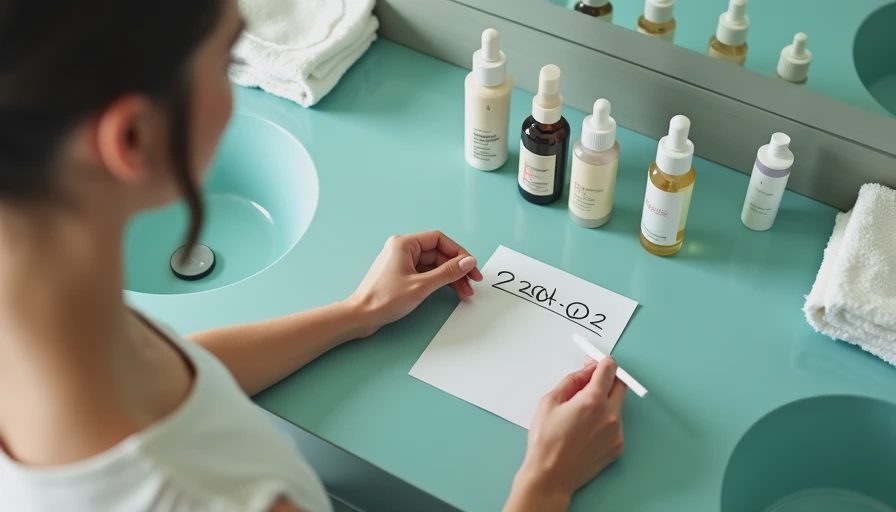
What ingredients are doing the work?
A serum earns its price when its formula gives you a clear reason to use it. Glycerin and hyaluronic acid help attract water to the skin, so they make sense in a hydration-focused product. Niacinamide is commonly included for barrier support and the appearance of uneven tone. Vitamin C formulas vary widely, and the form, concentration, packaging, and stability all matter. Retinoid products require especially careful use because strength and tolerability can differ from one formula to another.
I am not impressed by a long ingredient list by itself. A serum with 35 ingredients is not automatically more sophisticated than one with 12. I look for a sensible base, useful supporting ingredients, and packaging suited to the formula. Airless pumps can be practical for ingredients that are sensitive to repeated exposure to air. A clear dropper bottle on a sunny bathroom windowsill is not automatically a dealbreaker, but it does make storage more important.
My test for serum value for money is whether I can identify the product's main job in one sentence. If the answer is hydration, I expect humectants and a comfortable finish. If the answer is calming, I look for ingredients such as panthenol, allantoin, or beta-glucan. If the product promises brightening, I want to see a credible active rather than a vague blend hidden near the end of the list.
Expensive does not always mean wasteful
I do not believe every high-priced serum is a rip-off. Some formulas use elegant textures, stable active ingredients, thoughtful packaging, and extensive testing. Those qualities can raise manufacturing costs. A serum from SkinCeuticals, Skinfix, Paula's Choice, or La Roche-Posay may occupy a different price tier for specific formulation reasons, although the brand name alone is never enough for me to recommend it.
The question is whether you will notice a meaningful difference in your own routine. If a $68 serum spreads easily, causes no stinging, layers under sunscreen, and lasts four months, its monthly cost is about $17. A $22 serum that pills under moisturizer and gets abandoned after three weeks is not good serum value for money, even though it was cheaper at checkout.
Scent also belongs in the conversation, but I separate enjoyment from performance. A soft botanical scent may make you look forward to your evening routine, and that has value. It should not, however, distract you from paying premium prices for a formula with little else to support the claim.
How I compare two serums fairly
When I test two products, I avoid changing everything else at once. I use one serum on one side of my face and the other serum on the opposite side, keeping cleanser, moisturizer, sunscreen, and application amount consistent. I photograph the result in the same room and record texture, pilling, comfort, and how long each bottle lasts.
For a home comparison, use each product for at least two to four weeks when practical, unless irritation develops. Apply the same number of drops to clean, slightly damp skin. Do not judge a hydrating serum immediately against a treatment product that has a slower visible effect. These formulas have different jobs, and a glow after ten minutes is not the same thing as sustained comfort over several weeks.
I also note whether the serum works with products I already own. If it rolls into little flakes under a $14 moisturizer or sunscreen, that affects serum value for money because the product becomes difficult to use consistently. A formula that fits neatly into your morning or nighttime routine often delivers more practical value than one with impressive claims but awkward behavior.
Calculate the real monthly price
Here is the math I use at my testing bench. Start with the purchase price, then estimate how many applications the bottle contains. If a 30-milliliter serum gives you approximately 90 applications and you use it once daily, it lasts about three months. A $45 bottle then costs roughly $15 per month. If you use it twice daily, the same bottle lasts closer to six weeks and costs about $30 per month.
That calculation changes the conversation. A $30 serum might appear affordable, but if the pump dispenses too much and the bottle lasts only five weeks, its monthly cost can approach that of a $50 product used carefully for four months. The amount you apply matters, but so does the design of the dispenser. I prefer pumps or droppers that make a small, repeatable dose easy.
Promotions can complicate the math. A 20 percent discount is helpful only if you were already going to buy the product and can use it before the recommended period after opening. Buying three bottles because the sale looks impressive is not savings if two remain unopened in a warm bathroom.
My practical buying checklist
Before purchasing, read the amount, not just the front label. Check the ingredient list and identify the main purpose. Compare cost per ounce with at least one similar product. Consider whether you need a treatment serum at all, or whether your cleanser, moisturizer, and sunscreen already cover your immediate priorities. Then estimate how often you will use it and whether the texture suits your routine.
I also recommend starting with one new serum at a time. That gives you a better chance of noticing how your skin responds and prevents a $120 routine from becoming a confusing pile of half-used bottles. Patch testing is sensible for new products, particularly when the formula contains exfoliating acids, retinoids, or fragrant ingredients.
For me, serum value for money comes down to repeatable use, reasonable cost per application, and a formula that performs its stated job without requiring a dozen companion products. The best choice might be a $16 drugstore serum, a $38 midrange option, or an expensive product you use sparingly because its texture and formula are uniquely workable. Learn the label, then choose.



No letters yet — be the first to write.